
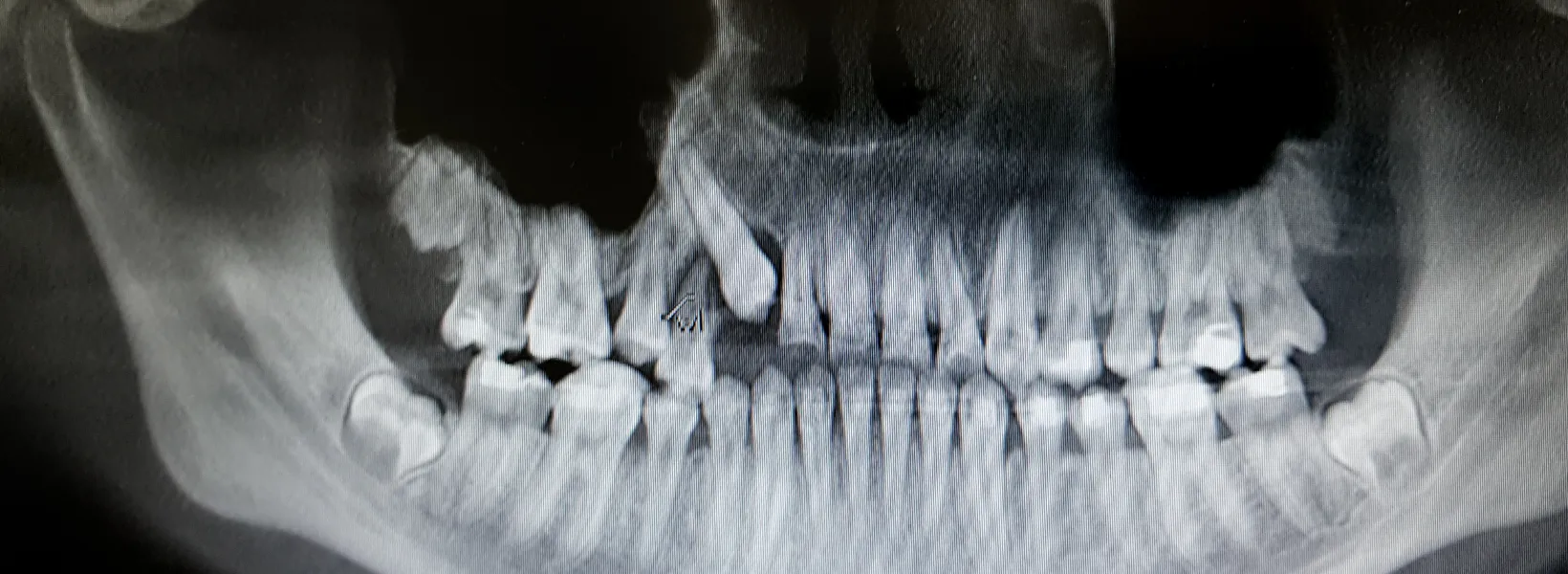
Sometimes a canine tooth gets stuck beneath the gums and can't come out on its own. This is a common issue in oral surgery, and it's highly treatable, especially when caught early. With the right care, your impacted canine can be guided into its proper place, supporting a healthy bite, a balanced smile, and confidence.
Why Early Treatment Matters
Canine teeth do more than fill up space. They anchor a healthy bite and support facial symmetry. When a canine doesn't erupt on schedule, it can crowd or damage nearby teeth and throw off an orthodontic treatment plan already in progress. Left in place too long, an impacted tooth can also raise the risk of cysts or damage to the roots of neighboring teeth.
Catching the issue early gives your surgeon a better chance to guide the tooth into position naturally, rather than facing more complex options down the road. A simple checkup at the right age, often around eleven or twelve, can make all the difference.
Why Choose Our Oral Surgery Team
Our surgeons have experience exposing impacted canines and guiding them toward a healthy eruption, no matter how the tooth is positioned. We work closely with your orthodontist, so timing and technique align with the rest of your treatment plan.
Advanced imaging lets us pinpoint the tooth's exact position before we ever pick up an instrument, and our minimally invasive approach keeps the procedure as gentle as possible. Patients trust us because we take the time to explain each step clearly, answering questions before they even have to ask. Above all, we focus on comfort, clear communication, and a smooth recovery.
What to Expect: Consultation to Recovery
Consultation & Imaging
We start with advanced scans to locate the impacted tooth and map the safest path forward. From there, we coordinate directly with your orthodontist to make sure the timing lines up with your broader treatment plan.
The Procedure
On the day of surgery, we offer local or IV sedation depending on your comfort level. Your surgeon creates a small opening in the gum tissue to reveal the impacted tooth, then attaches a small bracket or chain that will help guide it into position over the following months.
Recovery & Aftercare
Mild discomfort and swelling are common for a day or two after surgery. We'll send you home with clear post-op instructions to support smooth healing, and most patients return to school or work within just a few days.
Schedule Your Consultation
Your orthodontist already has a plan in mind, and our job is to help make it possible. We handle the surgical side with the same care and precision your family expects, keeping every step clear and as stress-free as it can be. From the first scan through the final follow-up, you'll always know what comes next and why. Reach out today, and let's start guiding that tooth toward where it belongs.
Common Questions
Sometimes, but it isn't usually recommended. Left untreated, an impacted canine can crowd nearby teeth, raise the risk of decay or cysts, and complicate future orthodontic work. In some situations, waiting too long means the tooth becomes fused in place and can no longer be guided into position. Your surgeon and orthodontist can help you weigh the risks based on your specific situation.
The surgical procedure itself usually takes under an hour. Guiding the tooth fully into place is a slower process, often taking several months to a year, as your orthodontist gradually adjusts the bracket and chain.
Cost depends on factors like the tooth's position and whether sedation is needed. Our team will walk you through a clear estimate during your consultation, and we're happy to answer any questions about insurance or payment options.