
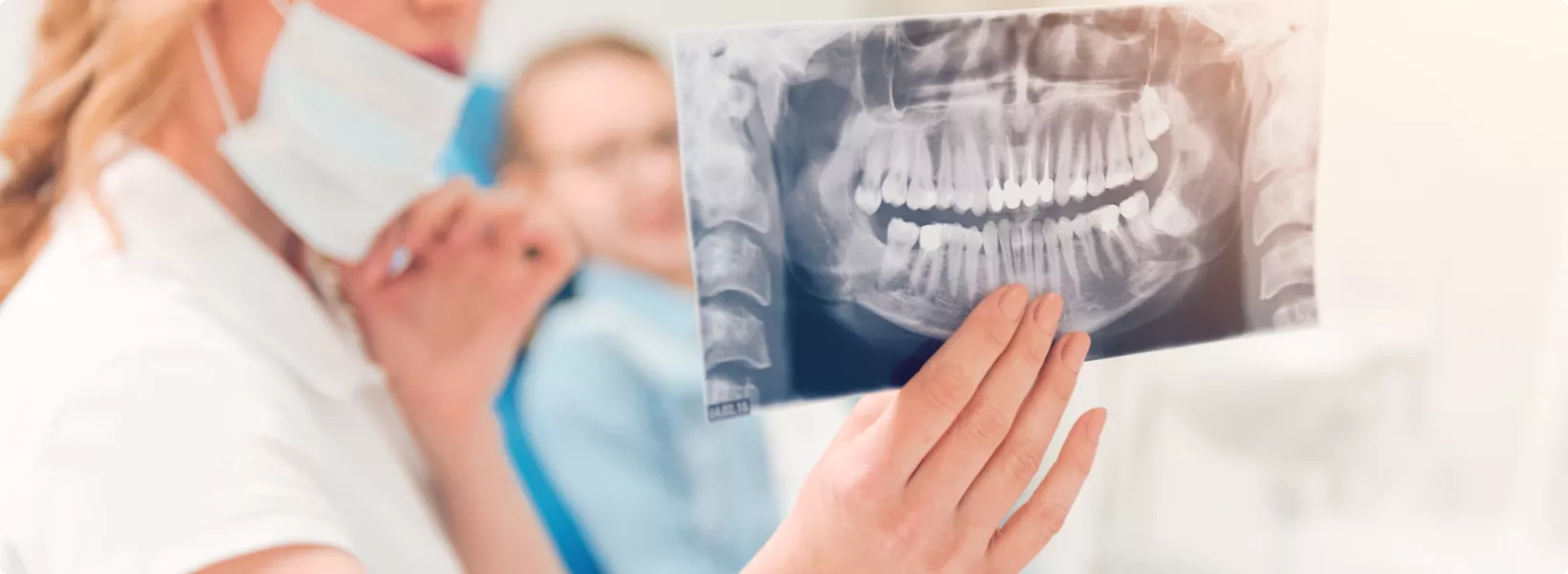
The wisdom teeth, or third molars, typically emerge from the gums in a person’s late teens or early twenties.
In some cases, these molars will develop properly, without disrupting other teeth. For many patients, however, wisdom teeth removal is necessary to prevent dental disease, tooth damage, aesthetic problems, and ongoing discomfort.
Dentists and orthodontists from both Northern Virginia and Maryland refer their patients to our oral surgeons for wisdom teeth removal because of their skill and experience in the procedure.
As oral and maxillofacial specialists, they perform these extractions nearly every day and treat cases ranging from simple to complex. Families who bring their adolescent children to our practice appreciate our doctors’ focus on patient comfort and safety. They promote these goals through advanced pain management techniques without relying on potentially addictive opioid medication.
Why Is Wisdom Teeth Removal Important?
When your dentist or orthodontist examines your wisdom teeth in your early teens, he or she may determine that these molars are likely to cause future dental problems.
Alternatively, some patients have their wisdom teeth taken out later in life after they begin experiencing pain, dental damage, and other problems. Depending on when you have the procedure, wisdom teeth removal can help you:
Prevent or resolve tooth decay, infection, and localized periodontal disease
Avoid having teeth shift out of alignment
Allow neighboring teeth to erupt properly from the gums
Prepare for corrective jaw surgery, orthodontics, or Invisalign®
Address cysts and tumors that form in the jaw
What Are The Symptoms Of Wisdom Teeth
Impaction?
If a wisdom tooth is severely impacted, the most obvious symptom is that the teeth never emerged from the gum. This is because they are tilted sideways and can’t come up properly.
Sometimes the teeth will partially emerge from the gums, with just a couple of points sticking up — this is a partial impaction. Many patients suffer from these common issues. Additional symptoms patients might experience include:
Swollen or read gums
Swelling in and around the jaw
Pain that runs along the jaw
Persistent bad breath
Problems opening the mouths
Bleeding or tenderness in the gums
Our Opioid Free Option
Many parents who are considering treatment for their children are concerned about the addictive risk posed by powerful opioid pain medications. Our oral surgeons understand this risk and have designed the wisdom teeth removal procedure to manage these concerns.
Our practice has been recognized for its use of EXPAREL®, a non-opioid pain medication that begins working before the wisdom teeth removal surgery is even complete. EXPAREL® lasts for several days after the procedure, significantly reducing the need for patients to use other pain medications.
Why Choose Our Practice For Wisdom Teeth
Removal?
We encourage patients to visit Virginia Advanced Surgical Arts by age 16 for an evaluation
Early diagnosis will help in timing wisdom teeth removal. Intervention at a young age also means less risk and greater comfort for patients.
This is one of the most common procedures that the practice offers, and our staff has a system that makes the process as efficient and pleasant as possible. During your treatment, we provide a full slate of amenities that include:
A screen for watching Netflix®
Warm blankets
A private recovery room
Personal icepacks
What Are The Consequences Of Not Getting
My Wisdom Teeth Removed?
There are a number of problems that can occur in patients who do not have their wisdom teeth removed. While they might feel fine now, over time, the teeth can begin pressing on adjacent molars, causing pain and pushing them out of alignment.
What’s more, if the wisdom teeth only partially emerge from the gums, this makes them extremely hard to keep clean. Bacteria can get underneath the gums and cause decay in the teeth.
Finally, many patients can also develop cysts or tumors around the wisdom teeth that are extremely painful and result in gum and bone loss.
An Overview of Wisdom Teeth Removal With
Our Practice
Your Consultation
1. Online registration – In an effort to simplify scheduling, we offer our patients registration through our website for their appointments.
2. Getting to know the practice – Usually, the patient and a parent will come in for the initial consultation. We will offer a tour of the office, demonstrate the amenities and technologies we provide and talk about our doctors’ experience supporting patients.
3. Meeting with Our Doctors – During your conversation, Dr. Gocke and Dr. McAdams will talk with you about the condition of your wisdom teeth and any symptoms you are experiencing. You will take some X-rays, get an overview of the wisdom teeth removal process, and receive answers to any questions you may have.
4. Personalized care – Our team will familiarize you with our post-surgery diet and pain management recommendations. We will give you prescriptions for the medications you may need in advance so that you don’t have to worry about filling them after your surgery.
5. Payment planning – You will meet with our office’s financial coordinator to plan your treatment. Our practice takes payment two weeks before the surgery.
6. Pre-treatment reminders – Once you have scheduled your wisdom teeth removal, we will typically call to remind you not to eat or drink for eight hours before the procedure and to confirm that you have arranged a driver to take you home.
What to Expect During Your Treatment
Most of our wisdom teeth removal patients come to our office for their procedure, but we can also provide care for special needs patients in our ambulatory surgical center or at a McLean children’s hospital.
At our office, you will settle into a memory foam chair where you can watch a show of your choice, request a blanket, and generally get yourself comfortable. We will also begin monitoring your heart rate, which helps us ensure your safety throughout the procedure.
During wisdom teeth removal:
Our doctors will treat you with nitrous oxide, which you may know as “laughing gas.” This common anesthetic approach will help you relax.
Nearly all of our patients then receive IV sedation, which allows them to be comfortable throughout the surgery and to get the best possible care.
The combination of nitrous oxide and IV sedation lets patients reach a deeply relaxed state, then our oral surgeons will inject local anesthesia to numb the area around the wisdom teeth.
Then we’ll extract the wisdom teeth and then inject EXPAREL, which should begin working shortly after. The medication will significantly reduce discomfort following surgery.
After Your Wisdom Tooth Removal Procedure
After your procedure, our team will guide you to a private recovery room. We will place moldable icepacks on your cheeks to minimize swelling and bruising.
Before you leave the practice, you will schedule a post-op appointment for one week later. One of our dedicated staff members will also review post-surgery instructions with you and your caregiver. Typically, we advise that you:
Change your gauze every 30 minutes for the first several hours
If prescribed, take ibuprofen every 6 hours
Stick to liquids and soft foods for the first day after surgery
Swap out icepacks every 30-40 minutes for the first 24 hours
If you are having wisdom teeth removal to prevent future dental concerns, you can expect a normal and healthy smile by the end of your recovery. If you are having surgery later in life because of problems related to your wisdom teeth, treatment should eliminate the chronic pain and dental complications that you have been experiencing.
When Is It ‘Wise” To Remove Wisdom Teeth?
We all have them and there comes the time in our mid-teens when we must deal with them. But what is the wisest thing to do when it comes to deciding whether or not to remove your wisdom teeth? Dr. Gocke has prepared a very special eBook for his patients that can help them make the best decision for themselves and their children. Our informative eBook discusses:
Why you should take an impacted wisdom tooth seriously
How the health of your wisdom teeth will affect your overall health
Before and after surgery tips that will make your surgery a walk in the park
Early Examination = A Healthy Future
There is a “window of opportunity” while wisdom teeth are new and the root systems not fully developed when the teeth are easiest to remove and will have the fewest complications. The longer you wait, the greater the risks of complications. We recommend that an evaluation at age 16 to check on root development and the likelihood of impaction.
Wisdom Teeth Removal Frequently Asked
Questions
Whether a patient should have their wisdom teeth removed depends on their specific situation. The only way to know for sure if wisdom teeth should be taken out is to schedule a consultation with Virginia Advanced Surgical Arts. They can take X-rays and perform an exam to determine if the wisdom teeth are likely to cause pain or other problems in the future. For example, if the teeth are impacted, he’ll probably recommend having them removed. If patients wait to have wisdom teeth removed until they experience pain, it can make the surgery more complicated.
While patients can have their wisdom teeth removed at any point during their lives, our surgeons recommend that patients start looking into the procedure around age 16.
By this point, all the permanent teeth should be in place, so it will be easier for our doctors to see if there is room in the mouth for the wisdom teeth to emerge and if they’re impacted. If not, they may recommend removal at our office. Having wisdom teeth removed earlier in life reduces the chances of complications, as older patients typically don’t tolerate the surgery as well.
For most patients, having their wisdom teeth removed all at once is the best approach. This is because it limits the number of times patients will have to undergo anesthesia and deal with aftercare. When all four teeth are removed in one procedure, the patient just needs to have one surgery, reducing costs and making it easier to recover. Patients will need to follow a strict liquid or soft food diet regardless of whether or not they have one or four teeth removed, so it just makes sense to have everything done at once.
Schedule a consultation to learn more about wisdom teeth removal. Contact Virginia Advanced Surgical Arts: McLean office at (703) 388-2805, Reston office at (571) 595-3223, or Leesburg office at (703) 723-5366.